Why the app industry rewards excellence

Villads Riber Mink
Commercial Director at Framna Denmark

In an app market defined by fierce competition and limited visibility, only a few apps capture most user attention and revenue. Mediocre performance rarely pays off. This article explores why excellence matters and how investing in native development for iOS and Android can be crucial for crafting a top-performing app.
Ready to build an app that stands out—not blends in? Contact us.
Top apps dominate the market by shaping app store dynamics and user engagement patterns
The app market is highly polarized, with most of the value concentrated at the top. Studies show that in each major app category, such as social media, entertainment, gaming, productivity, and health, the top three to five apps consistently capture the majority of revenue and user engagement.
In fact, the top ten apps per category globally account for 87% of all App Store traffic. With 33 categories on Google Play and 24 in the Apple App Store, just 240–330 apps dominate the landscape—leaving limited visibility for the rest.
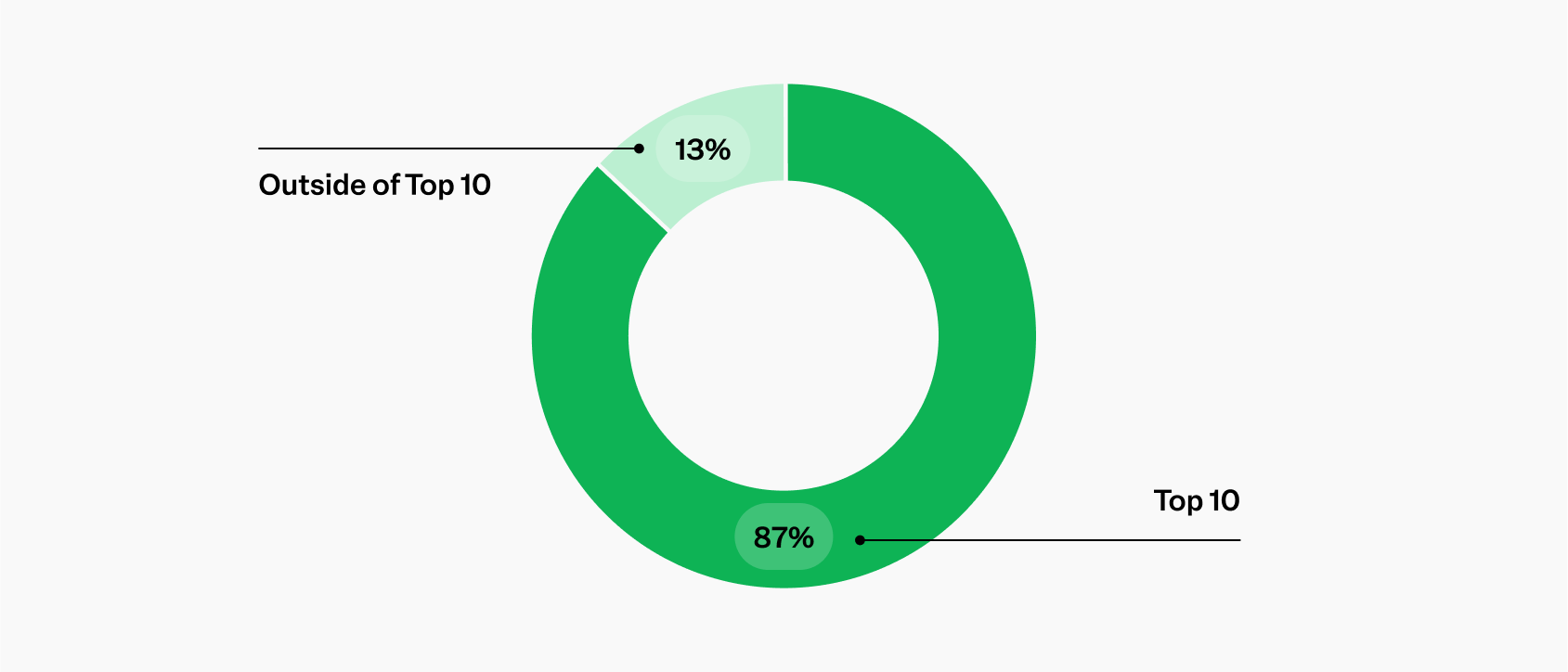
This polarization is shaped by user preferences, app visibility, and the quality of the user experience amplified by outliers like social platforms that drive massive download volumes.
In some markets, apps open up opportunities to lead. In others, they demand investment simply to stay in the game. Either way, the stakes are high and the strategy matters.
The economics of top performers versus mediocre apps
Developing a mobile app requires significant investment in terms of time, resources, and capital. But the return on that investment depends entirely on how the app performs in the market.
Why leading apps capture more revenue and outperform the competition
Top apps in any category often see exponential returns compared to those ranked lower. Platforms like Spotify and Instagram dominate their spaces, capturing the majority of user engagement and revenue. However, the extent of this dominance varies by market. In some sectors, there is room for multiple players to succeed, particularly when an app supports a physical product or service.
Take ferry apps as an example. These are typically tied to a single operator, making the app a channel for upselling, loyalty, and convenience. Since the user is taking the ferry regardless, the app enhances the experience but does not determine the purchase. In contrast, apps like Spotify and Instagram rely entirely on digital engagement to drive growth, with no connection to a physical offering.
For businesses without a physical product, digital visibility and user engagement are not just helpful, they are critical to unlocking value from the app.
How app store algorithms reduce user acquisition costs for top apps
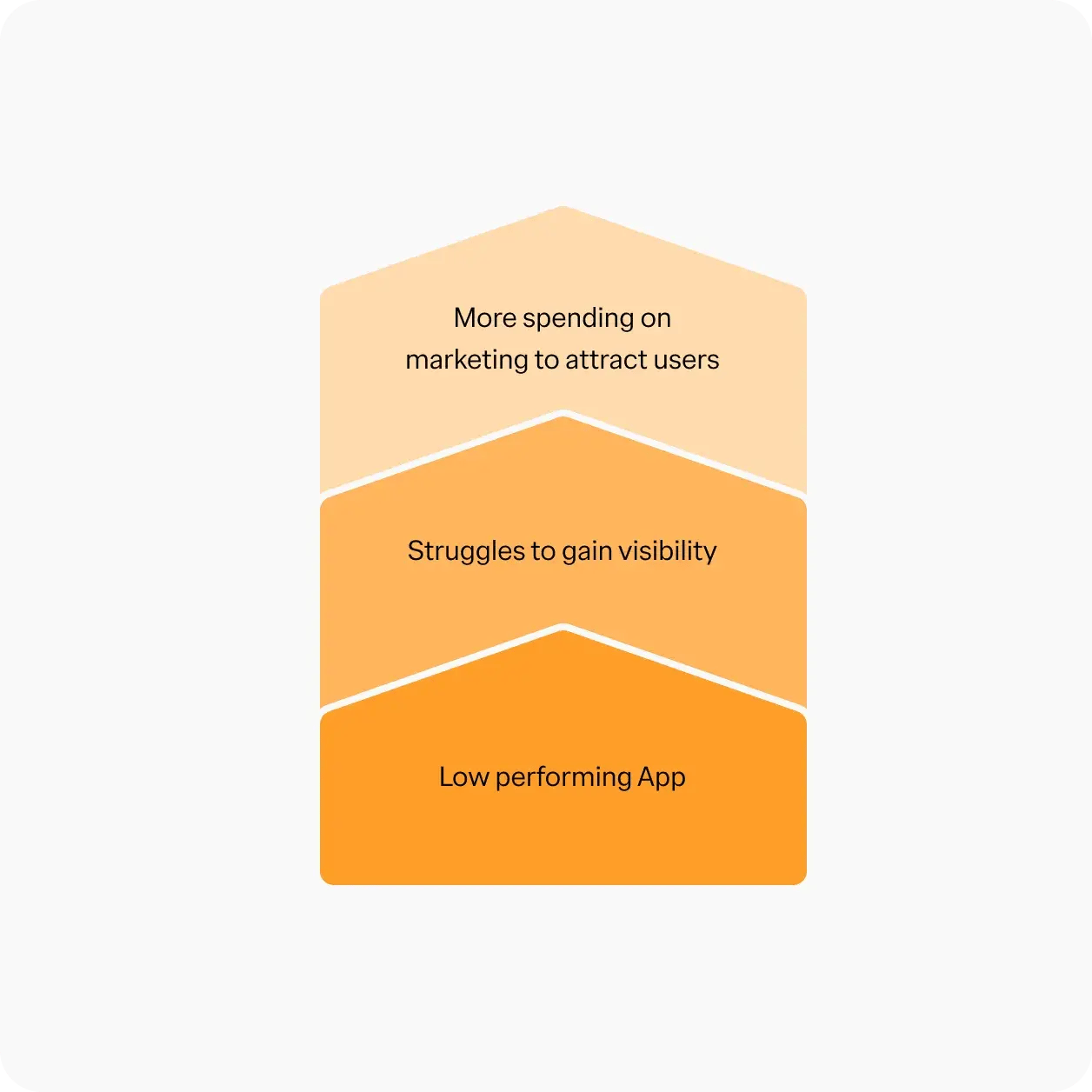
Top-performing apps benefit from lower user acquisition costs due to higher visibility and stronger organic reach. In comparison, mediocre apps often face challenges gaining traction and must invest more heavily in marketing and promotion to attract users.
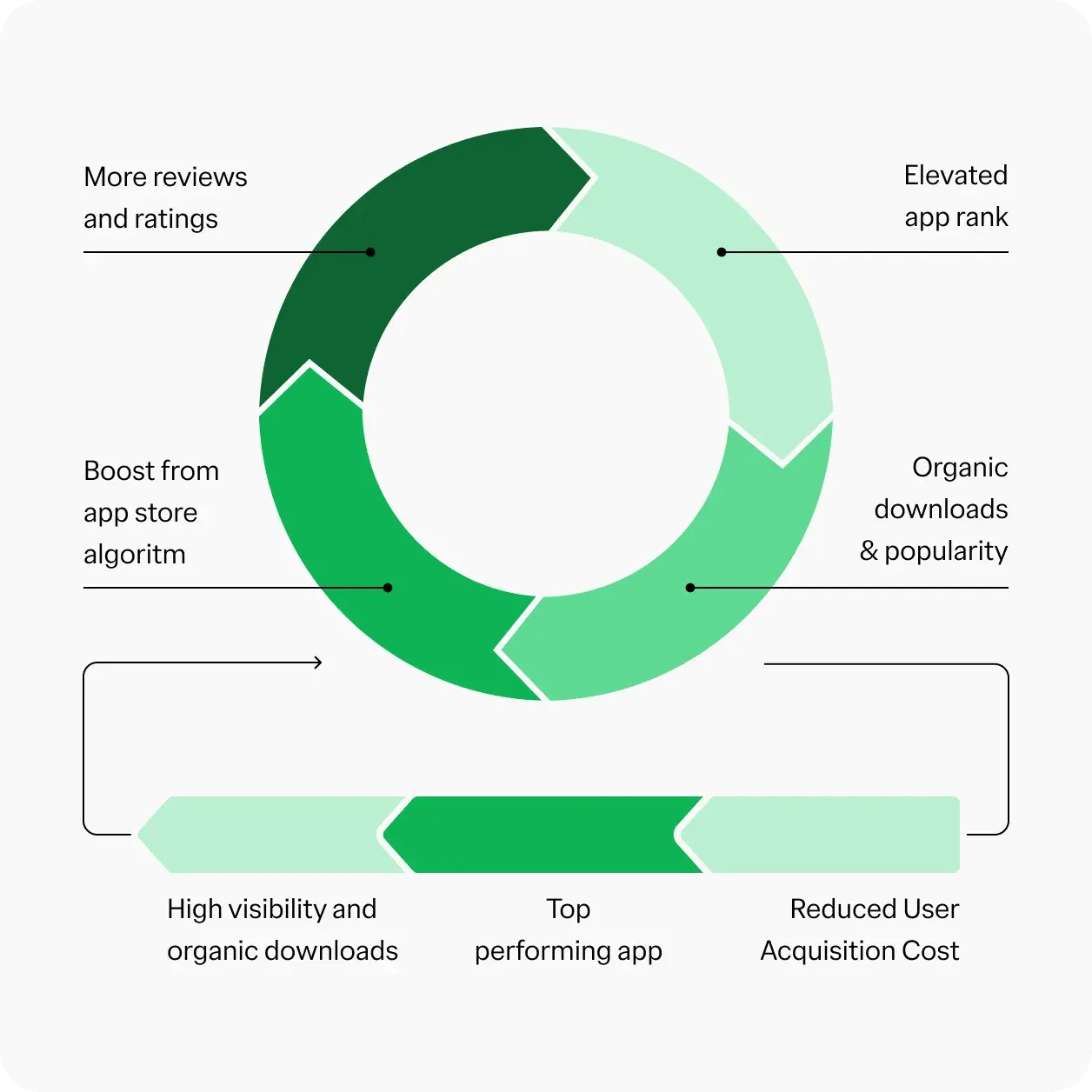
App store algorithms consistently favor apps with high engagement and user satisfaction. A strong ranking boosts visibility, which leads to more downloads. These downloads generate additional reviews and ratings, further improving the app's position.
This creates a positive feedback loop. More visibility leads to more downloads, which in turn strengthens the app’s standing. As the app climbs the rankings, it gains organic exposure that reduces the need for paid acquisition. This cycle reinforces success and lowers overall user acquisition costs.
How top apps drive engagement and keep users coming back
Top apps consistently achieve higher user engagement and retention rates, which are essential for long-term success. Users are more likely to return to an app that delivers a seamless experience and clear value. This strengthens the position of top-performing apps while making it harder for mediocre apps to catch up.
To illustrate this, Alchemer conducted a study surveying 100,000 users over two months to measure the impact of app ratings on monthly interactions. While the study has its limitations, it provides valuable insights that support these findings.
The risk of mediocrity
Investing in app development without aiming for the top can be risky. Apps that fail to reach the leading positions in their market often struggle to generate sufficient revenue to justify their development costs. Moreover, they face ongoing challenges in user acquisition and retention, creating a cycle of low profitability and limited growth.
Benefits of native app development
Choosing the right technology is essential when building a top-performing app. Native app development with Swift for iOS and Kotlin for Android provides a range of advantages that help apps stand out in a competitive market. These include:
Optimized performance
Native apps are built specifically for their platforms, resulting in faster load times and smoother interactions. This leads to a more responsive and enjoyable user experience.
Stronger integration with device features
Native development allows deeper access to built-in hardware like the camera, microphone, and sensors. This creates a more seamless and feature-rich experience for users.
Improved security
Native platforms support advanced security tools and practices, helping to better protect user data and reduce vulnerabilities.
Consistent user interface and experience
By following platform-specific design standards, native apps deliver a more intuitive and consistent interface that feels familiar to users.
Securing market share through top-tier app development
The app industry is not only competitive, it heavily rewards those at the top. The gap in value between a mediocre app and a top-performing app can be substantial, both in financial returns and market visibility. While investing in high-quality native app development requires significant resources, the potential payoff of becoming a market leader often makes it worthwhile.
To secure and sustain market share, businesses need a clear strategy and a commitment to excellence. As the digital landscape evolves, the stakes will continue to rise. Native app development remains a crucial factor for building standout apps in an increasingly crowded market.
Subscribe
Join our newsletter and stay up-to-date