Designing for everyone: ADA-compliant digital experiences in aviation
Stefan Smit
Commercial Director at Framna Denmark

At Framna, we specialize in crafting seamless, inclusive digital experiences for travelers. With deep expertise in aviation and accessibility standards, including the Americans with Disabilities Act (ADA) and Web Content Accessibility Guidelines (WCAG), we help U.S. airports design digital solutions that are not only compliant, but welcoming to all passengers. Explore our approach to building accessibility into every layer of the digital journey.
Since 1990, the Americans with Disabilities Act (ADA) has prohibited discrimination on the basis of disability. The law applies to employment, public facilities, public transportation and communications, among others. The ADA refers to the Web Content Accessibility Guidelines version 2.1 level AA (WCAG) as a standard for digital accessibility. These guidelines provide detailed specifications for making web content accessible. Courts and government agencies should apply it to websites, apps and other digital environments.
Many U.S. airport websites are not ADA compliant
Many U.S. airports use accessibility plugins, yet their websites often still fail to meet compliance standards. This can lead to two major issues, poor digital experiences for passengers with disabilities, which may result in complaints, legal claims, and compensation costs and financial penalties for non-compliance. Since 2024, fines have ranged from $55,000 to $150,000 per violation. In 2022 alone, U.S. courts handled over 4,060 web accessibility cases, a 76 percent increase compared to 2018, indicating a growing legal and reputational risk.
Our ADA approach
At Framna, we follow the latest accessibility guidelines by default. This includes applying WCAG 2.1 Level AA standards from design through to delivery, ensuring our websites, apps, and digital platforms are usable by everyone. We invest in ongoing training and education for our team and maintain a dedicated "Digital Accessibility" project group. This team actively explores new solutions and keeps pace with global developments, including the European Accessibility Act (EAA). By embedding accessibility into our processes, we help create a more inclusive and equitable digital world. Based on our experience, we consider this approach a best practice and one we actively recommend to government agencies worldwide.
How we can help
Framna supports airports in meeting digital accessibility standards. We start with an internal audit to assess the accessibility of your website or digital platform, evaluating it against WCAG guidelines and identifying key areas for improvement. We use accessibility scanners, detect issues such as missing alt text, poor color contrast, and navigation challenges. Based on our findings, we provide clear recommendations for necessary updates to achieve compliance. We also offer training to support long-term accessibility and can facilitate user testing with people with disabilities to guide further improvements. ADA approach to an airport website
An example of one of our ADA projects is the CVG Airport website. In it, we took into account:
Navigation and layout
CVG Airport's site has a clear structure. Users easily find what they are looking for thanks to the clear main menu. Important sections such as 'Passengers', 'Business', 'Careers', and 'Accessibility' are directly accessible.
Readable content
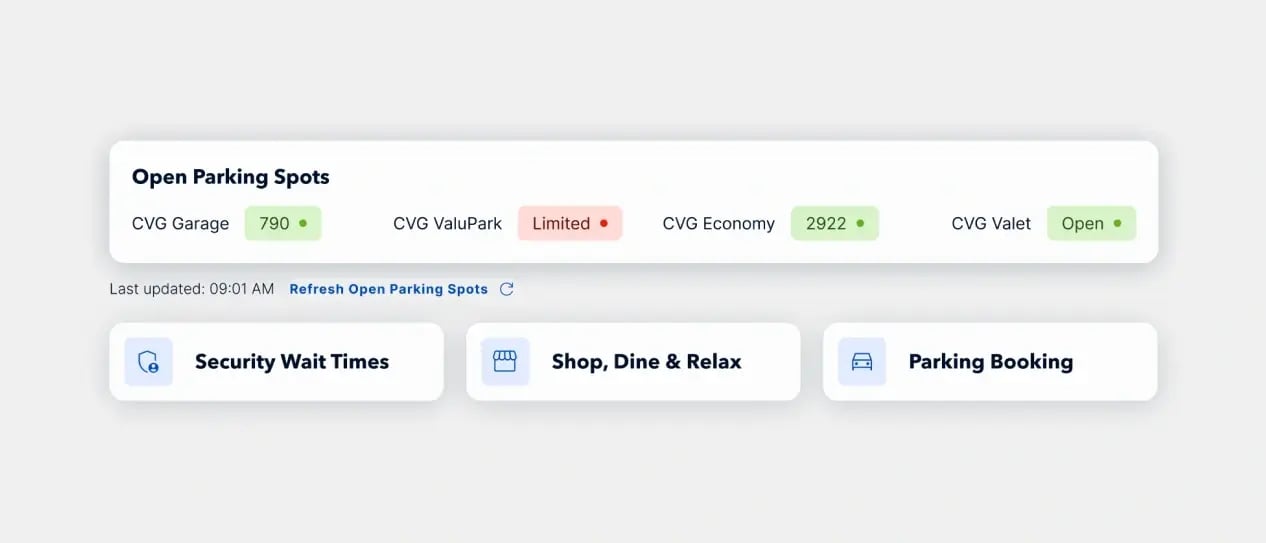
We have ensured easy-to-read text with a clear font and sufficient contrast. This is crucial for users with visual impairments. The color scheme is simple and consistent, which further improves readability. It is also immediately clear what is a button and what is static content. We carefully considered branding and contrast colors, such as white on black and light green on dark green.
Alt text for images
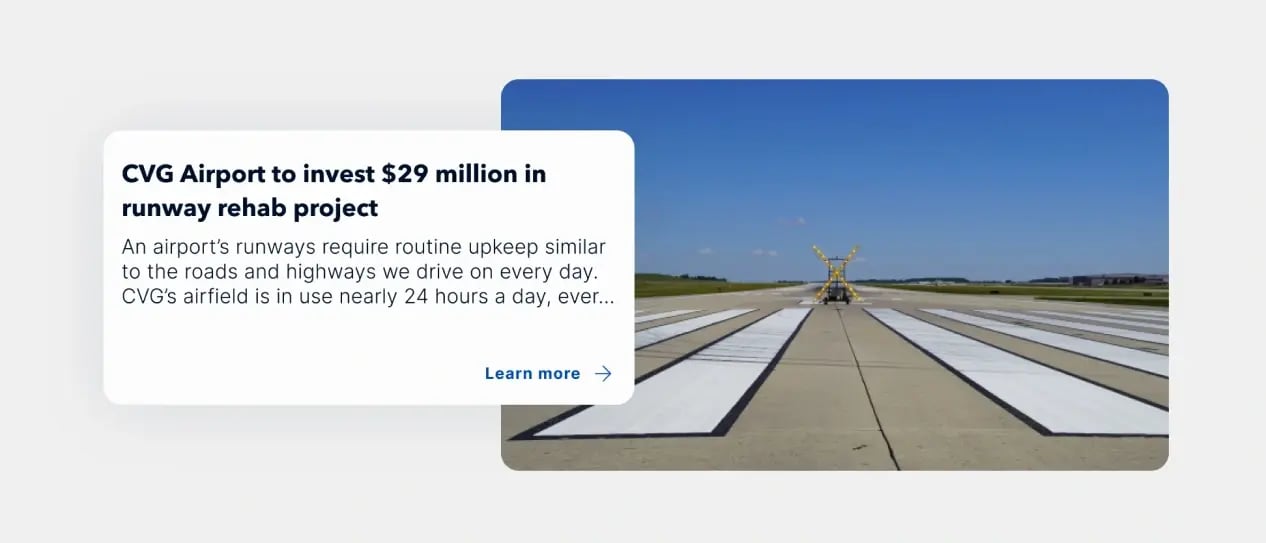
Images on the site are provided with Alt text (alternative text). This helps users who use screen readers to understand the content of the images. For example: alt = A photo looking down runway 18C with a giant X standing up in the middle of the runway to mark the closure. Search engines also use alt text to understand what an image is about, which can improve a website's visibility in search results.
User-friendly search function
The search function on the site is accessible and provides a quick way to find certain information on the website. Want to learn more about ADA compliance for airport websites?
Subscribe
Join our newsletter and stay up-to-date