Building intelligent products

Insights_Blog_EDAY-Talk-Thomas_Header_1848x792


AI is changing how quickly digital products can be built and tested. At EDAY, Thomas Kuperus, Head of Strategy at Framna, used findings from our Mobile App Trends Report to explore the question that follows: when building gets faster, what is worth building next?


The research is based on almost 14,000 respondents and more than 400 apps across the Netherlands, Denmark and Sweden. It shows what contributes most to perceived app quality, but also where mature products still have room to stand out.


One area stands out in particular. Innovation and personalization still leave considerable room for improvement, even though together they play a critical role in how users experience feature richness. That is where the intelligence layer comes in, and where this article picks up Thomas’ talk.

Insights_Blog_EDAY-Talk-Thomas_image-1-844x362
Talk at EDAY 2026 in Amsterdam: Lessons from Northern Europe's largest app study
Feature completeness remains important, but it is hard to differentiate on

Within our Pulse framework, feature richness is the strongest of four drivers used to explain perceived app quality. It accounts for 29% of the Pulse score, ahead of UX and design, technical performance and trust.

Within feature richness itself, having all the features users need has the greatest impact.
The challenge is that mature apps already tend to perform well here. Being feature-complete therefore remains important, but it becomes harder to stand out because there are simply less functional gaps to close.

Personalization and innovation show a different pattern. Together, they account for 50% of the impact on feature richness, while scores across the market remain relatively low.
We describe this combination as the intelligence layer: where innovation and personalization come together within a digital product.

For product teams, that raises a different question: how do you make a digital product more intelligent in a way that improves the experience?

Three ways to build intelligence into a product

Intelligence does not always need to look like a chatbot. Across different products, it can appear in three ways.

Explicit intelligence

With explicit intelligence, users know they are interacting with an intelligent feature.


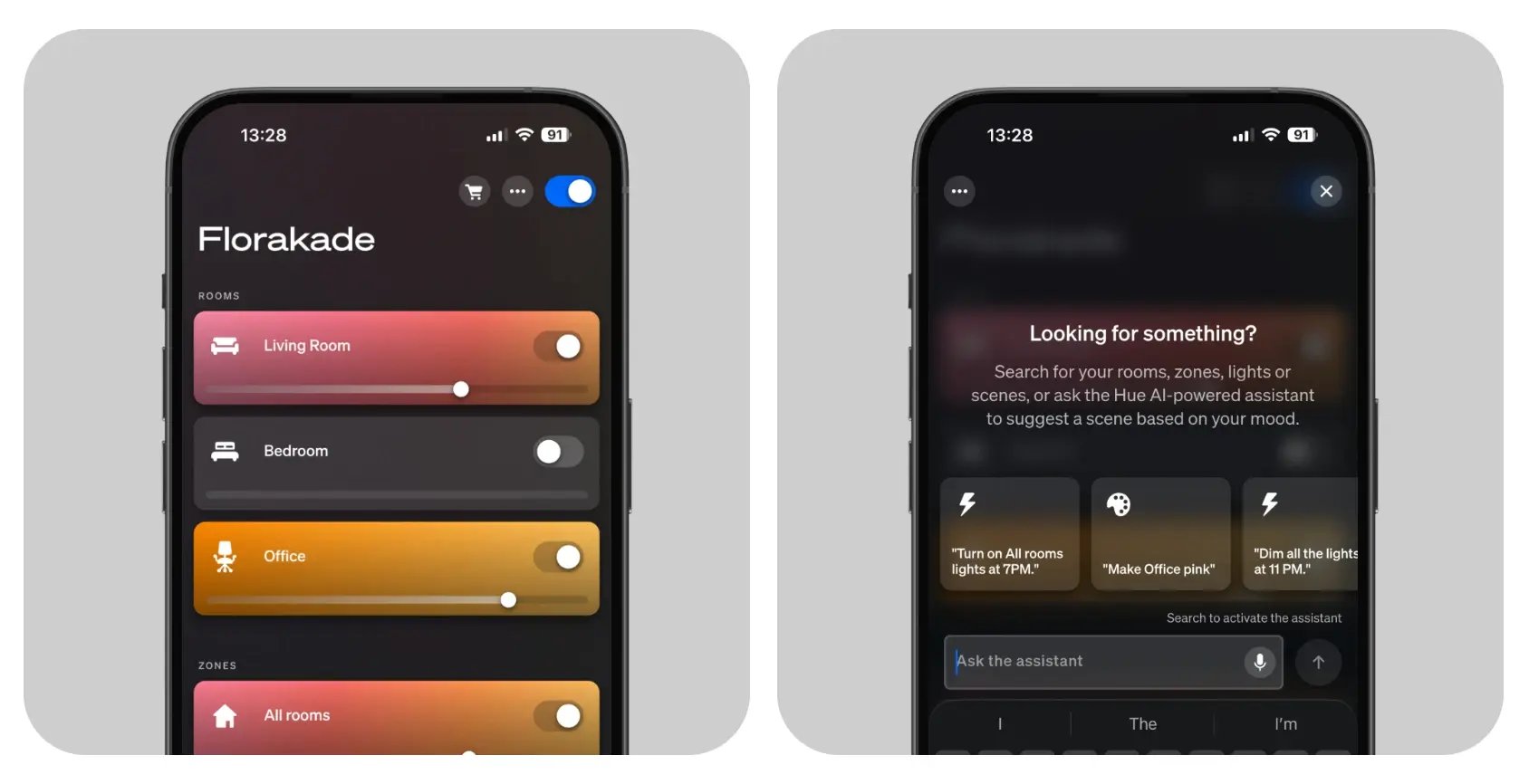
Tesla, for example, has integrated an AI support assistant into its app. Instead of searching through FAQs, users can ask a question about their vehicle and receive an answer tailored to it.


Philips Hue takes this a step further. A user can give the app an instruction such as changing the lights in a home office, and the product translates that prompt directly into an action.


In both cases, the intelligence is a visible part of the interface.

Insights_Blog_EDAY-Talk-Thomas_image-1A-844x362
Philips Hue and Tesla serving as examples for the explicit intelligence layer.
Ambient intelligence

With ambient intelligence, most of the work happens in the background. The product responds to context or behaviour without requiring the user to actively ask for help.


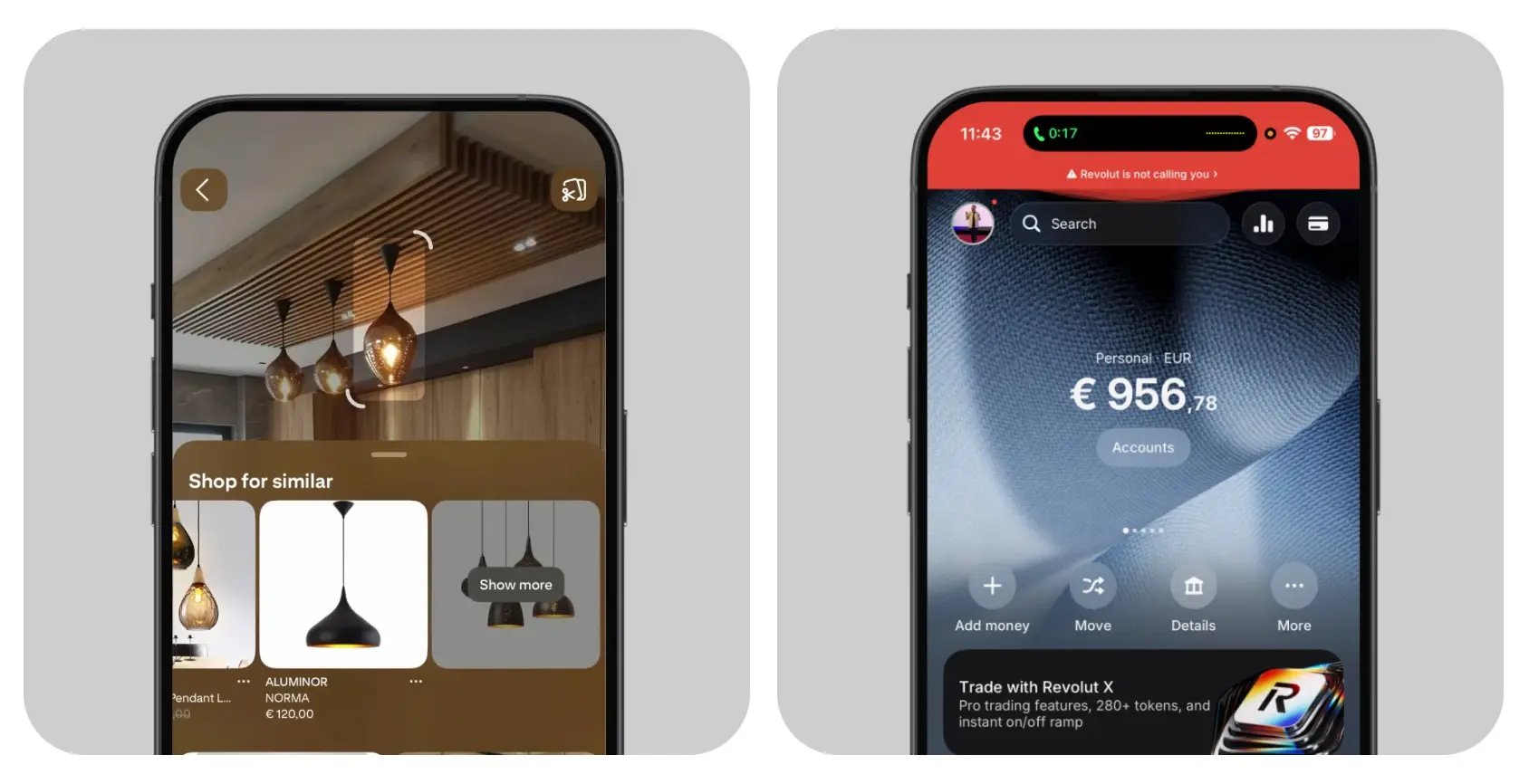
Pinterest, for example, adapts recommendations based on what someone interacts with. Selecting a particular element in an image can lead to visually similar results, while recent behaviour influences what appears in the feed.


Revolut applies ambient intelligence to security. Its systems monitor transactions for suspicious behavior and surface warnings when needed. The company has also introduced call verification that can alert users when someone claiming to be from Revolut is calling them.


The intelligence becomes part of how the product works rather than something the user has to seek out.

Insights_Blog_EDAY-Talk-Thomas_image-1C-844x362
Ambient intelligence applied in Pinterest and Revolut.
Embedded intelligence

Embedded intelligence is less prominent. The user still sees the result, but the technology works within an existing task rather than becoming the main interaction.


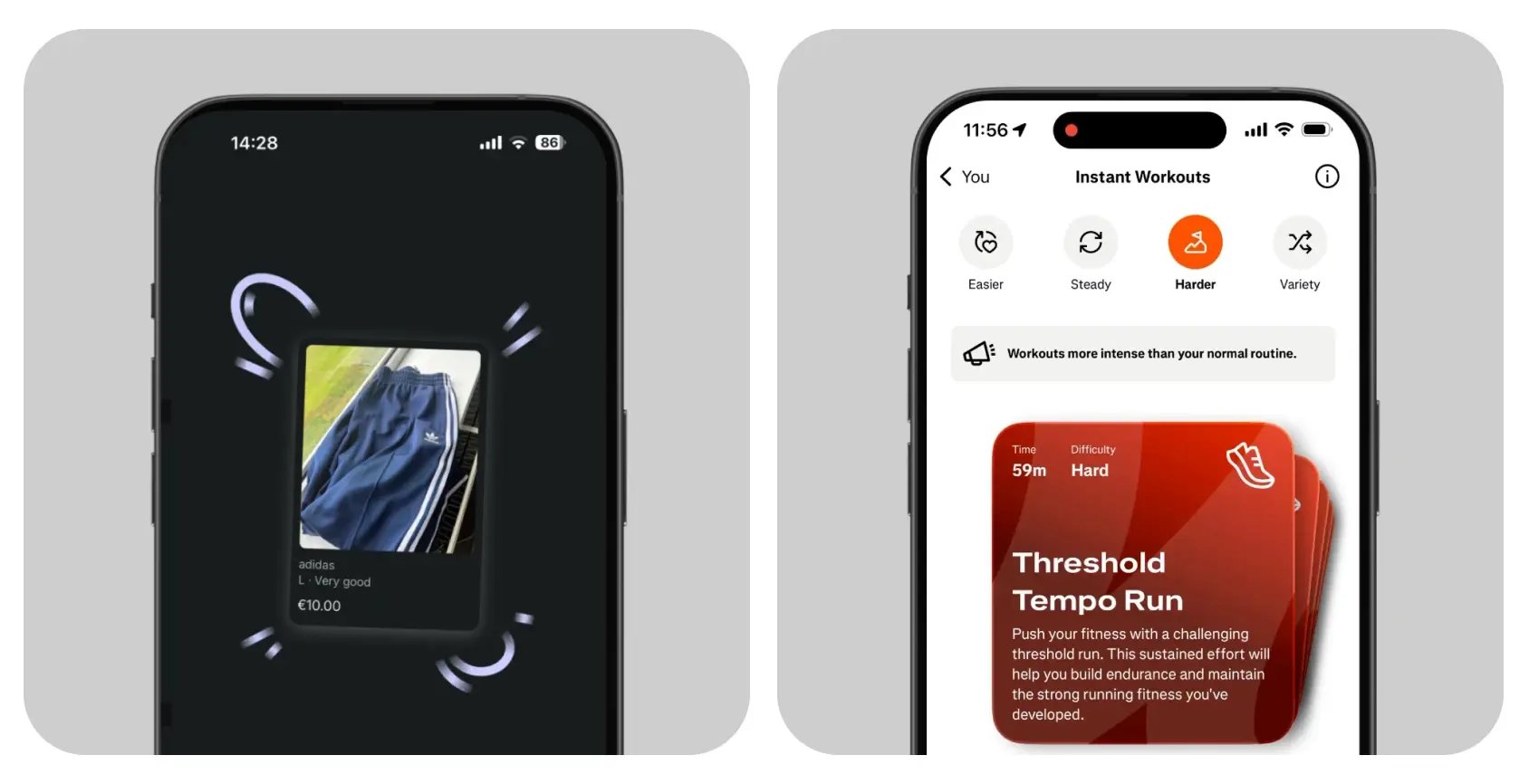
Vinted does this when someone lists an item for sale. Based on the uploaded photos and title, the app can suggest the category, brand, colours and a price. That reduces the amount of information the user has to enter manually.


Strava uses personal workout data in a similar way. It calculates a user’s average intensity and uses that information to suggest workouts that fit their level.


Here, intelligence supports the flow rather than becoming a separate destination within the product.

Insights_Blog_EDAY-Talk-Thomas_image-1B-844x362
Embedded intelligence used with Vinted and Strava.

Subscribe

Join our newsletter and stay up-to-date