
Designing payment interfaces for point of sale systems

Piotr Mionskowski

Piotr Mionskowski

Head of Technology, Framna Poland

Framna-Case-YCD Atmosphere-Featured-1200x626
Payment is one of the most critical moments in any point of sale system. Every interaction influences transaction speed, staff confidence, and ultimately the customer experience. 


In busy retail and hospitality environments, even small moments of friction can slow service, increase errors, and reduce operational efficiency.

That is why great POS UI design is about far more than aesthetics. It is about creating products that help people work faster, make fewer mistakes, and deliver consistently great service, even during peak hours.

At Framna, we believe winning starts with the product. The best payment experiences are designed to support business outcomes as much as user needs: increasing throughput, reducing training time, and enabling teams to perform with confidence.
Start with real user context

Designing a payment interface begins long before the first screen. 

Cashiers, waitstaff, and service employees operate in environments where attention is divided, queues build quickly, and every second matters. They are often serving customers, handling payments, solving problems, and communicating with colleagues simultaneously.

Strong POS design reflects this reality. Every screen should support fast recognition, predictable interactions, and confident decision making without requiring interpretation or unnecessary training.

Products designed around real operational workflows reduce friction for users while helping businesses maintain speed and consistency during their busiest hours.

Use motion only when it adds clarity

Animation should communicate, not decorate.

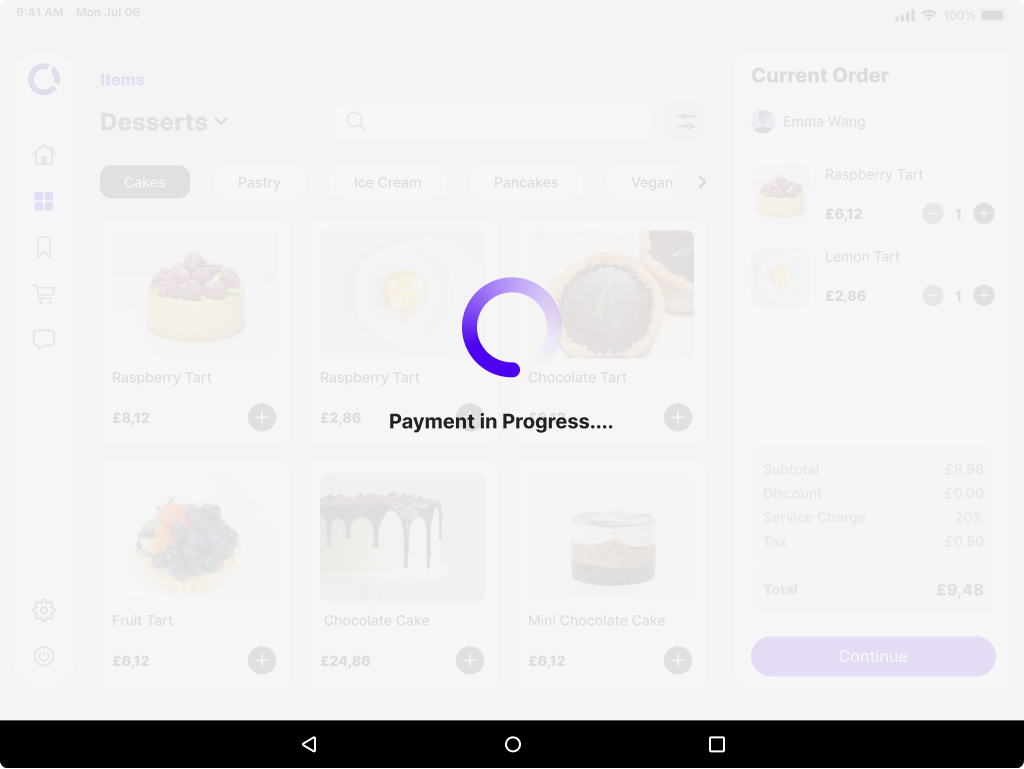
Well-designed motion confirms that an action has been registered, indicates payment progress, or signals that a transaction has been completed successfully. These small moments of feedback reduce uncertainty and help users stay focused on the task at hand.

Decorative animations achieve the opposite. They compete for attention, interrupt flow, and introduce unnecessary delays into high-frequency interactions.

In payment interfaces, every interaction should have a purpose.

f98ac0df-a35c-4e1f-8b04-f35e6eb3d819
Make payment options instantly recognizable

Users should never have to stop and interpret how to pay.

Payment methods should be immediately recognizable through familiar visual patterns supported by clear text labels. Icons alone are rarely enough, particularly in environments where users move quickly or where new payment methods continue to emerge.

Reducing ambiguity at this stage helps prevent payment errors, shortens transaction time, and creates greater confidence for both employees and customers.

Establish a strong action hierarchy

Every payment screen should make the next action immediately obvious.

Primary actions deserve visual prominence, while secondary actions remain available without competing for attention. Strong hierarchy reduces cognitive load and enables users to move confidently through each transaction.

This becomes increasingly important during busy trading periods, where even small improvements in decision speed can translate into measurable operational gains across thousands of daily transactions.

Design forms for speed

Payment forms should support natural scanning patterns rather than forcing users to search for information.

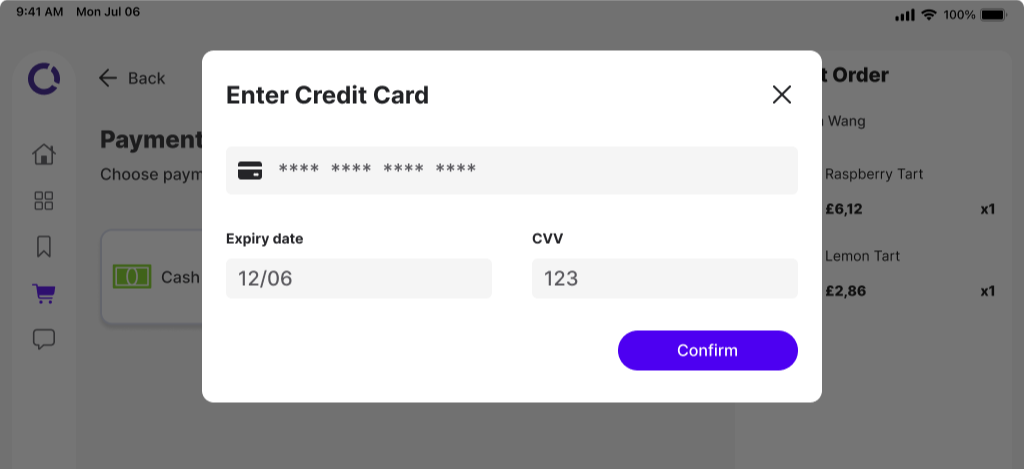
Arrange fields vertically, position labels directly above inputs, and remove every field that does not actively contribute to completing the transaction. Every additional interaction introduces friction and increases the opportunity for mistakes.

Simple forms help employees complete payments more quickly while reducing onboarding time for new staff.

c76d8ba8-7ed5-4869-96ba-e7445153f297-1
See these principles in practice

The best practices above are not theoretical. They shape the products people rely on every day.

Our work with Just Eat demonstrates how thoughtful POS design can support faster operations while creating a smoother experience for restaurant staff. By focusing on speed, clarity, and usability, we helped create a product that enables teams to stay efficient during busy service periods.

Read our Just Eat POS case study.

Build payment experiences that help your business win

Payment interfaces have a direct impact on operational performance. Small improvements in usability can reduce errors, shorten transaction times, simplify staff onboarding, and improve the overall customer experience.

If you are evolving a retail or hospitality product, we would be happy to discuss where your payment experience creates friction today and where thoughtful product design can create measurable impact.

Subscribe

Join our newsletter and stay up-to-date