Designing with AI without losing your judgment
Aliz Oláh-Nagy
Product Designer, Framna
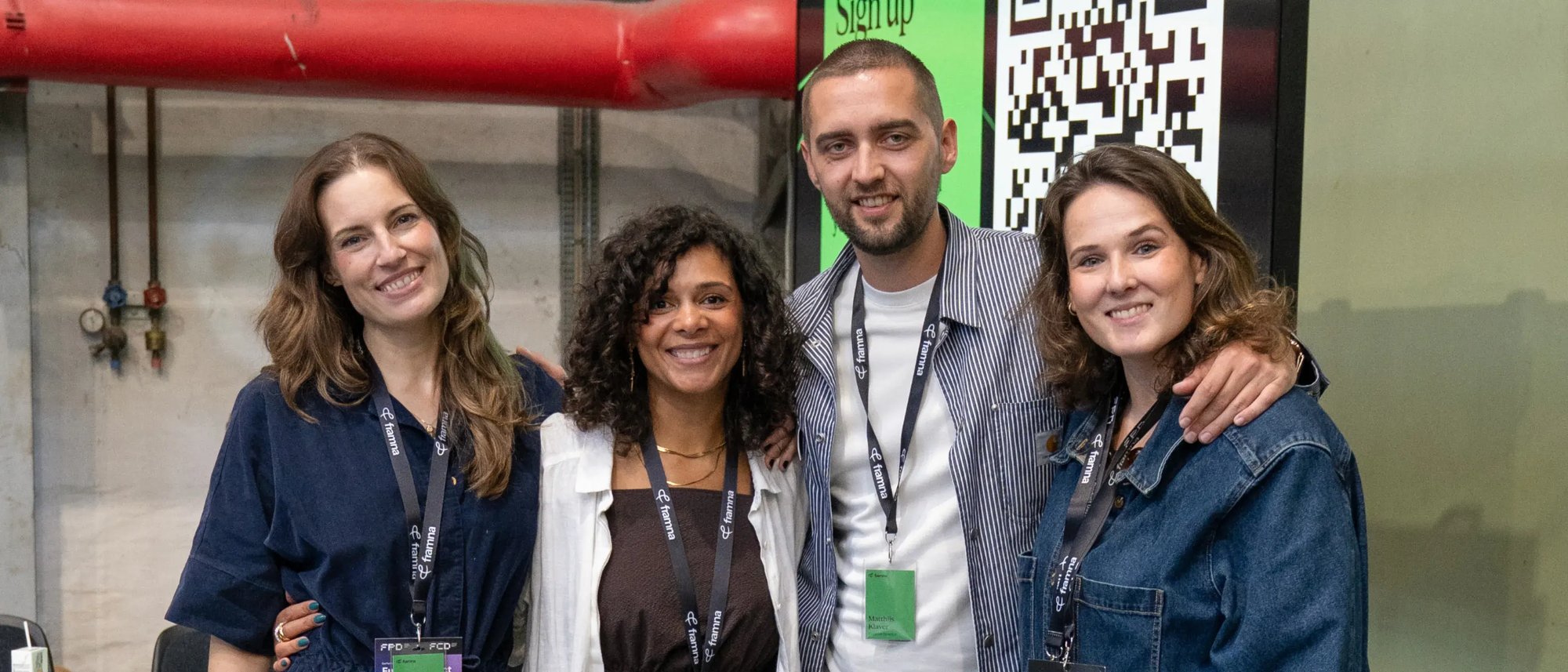
Our four Framna Masterclass hosts: Aliz Oláh-Nagy, Claudia Velhas, Matthijs Klaver and Valérie Nusman.
AI now takes part in almost every step of design work. It summarizes research, drafts briefs and turns ideas into working prototypes in minutes. That changes the designer's job. When a tool can produce the output, the value moves to the decisions around it: what to make, why, and whether it's good enough.
At Framna, this isn't an abstract question. With Framna Build, agents write more and more of the code from shared specs, while our people set the direction and make the calls. So the question we care about isn't whether designers should use AI. It's what designers need to get even better at when AI does more of the work.
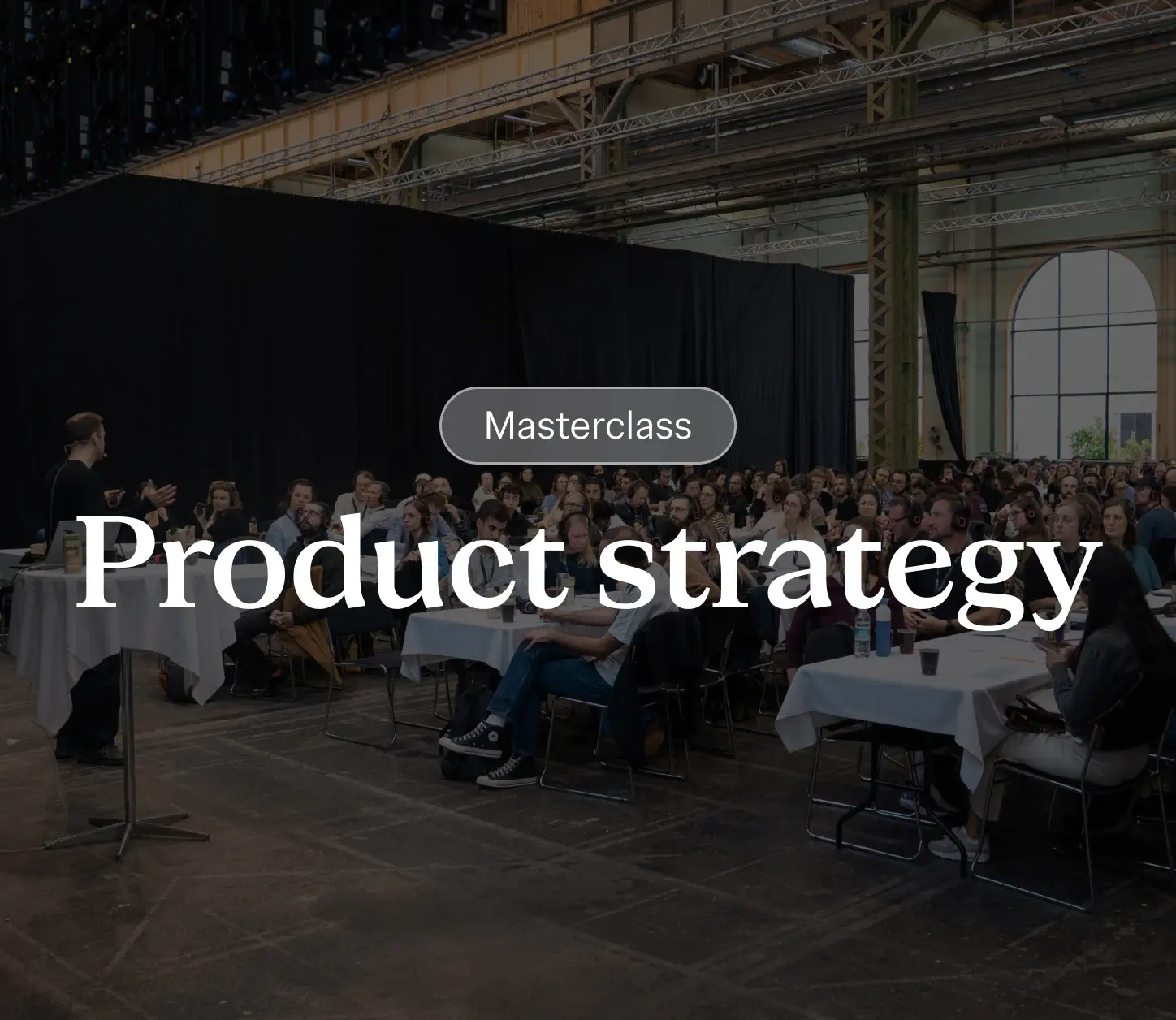
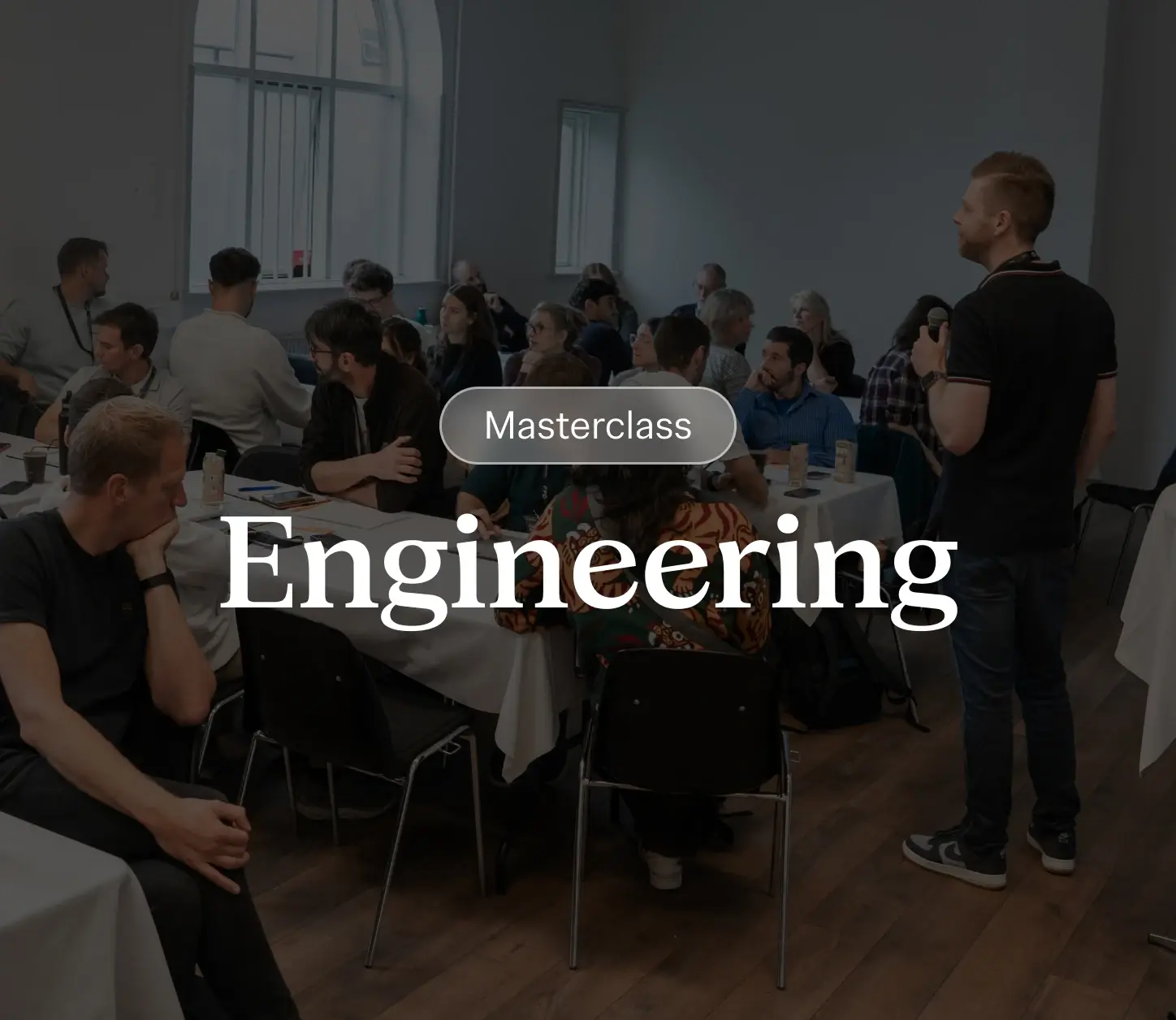
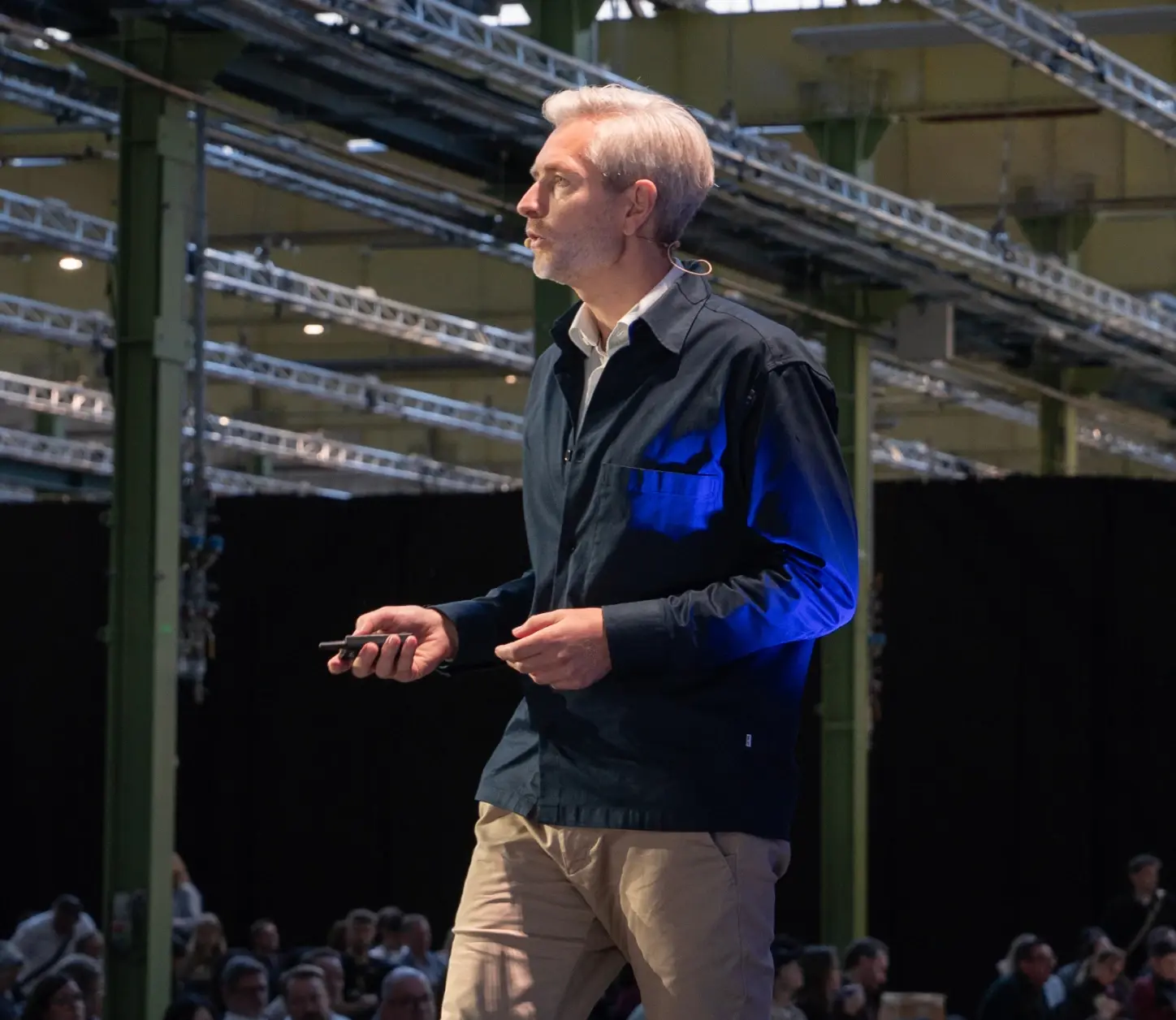
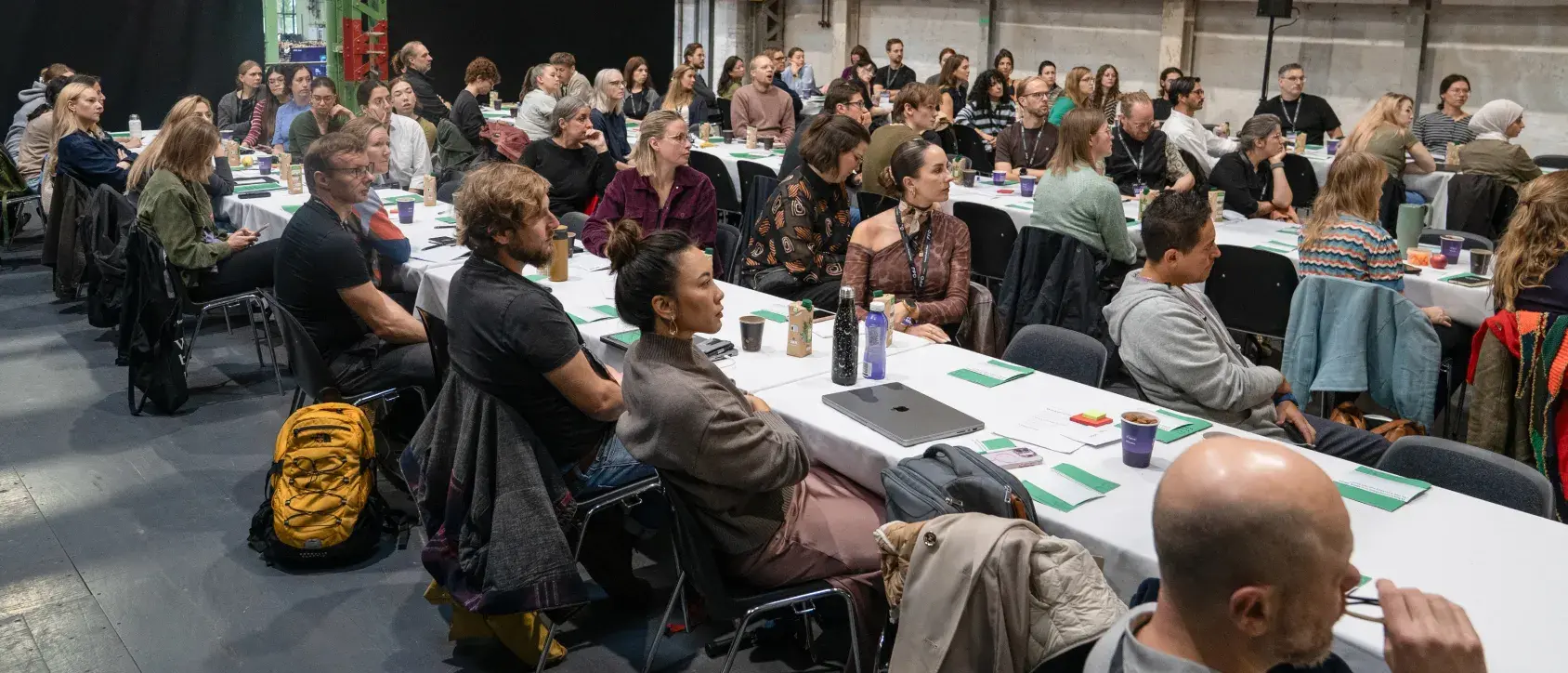
That was the question behind our design masterclass on the last day of Future Product Days 2026 in Copenhagen. For five hours, more than 100 designers worked through talks, real case studies and a lot of sticky notes. This article collects what came out of the day: the ideas from the stage, the discussions at the tables, and host Aliz Oláh-Nagy's reflections afterwards.
Across the day, the room landed on the same answer. AI can take on more and more of the making. What it can't do is decide what good looks like for a specific product and its users. That judgment is the designer's job, and it becomes more valuable as the tools get faster.
Key takeaways
The masterclass in five points. Each one is unpacked below.
Keep the thinking on the canvas
Taste isn't something you're born with. It's built one small decision at a time, by working directly with the design. You nudge something, see what changes, and decide whether it's better. Do that a few thousand times and you have a designer's eye.
That's why a tool like Figma is more than software. The canvas is where decisions get made, and where they stay visible. The explorations, the discarded directions and the annotated flows together tell the story of why the product looks the way it does.
Tools that go straight from a prompt to a finished result make it easy to skip that story. The rough options, the side-by-side comparisons and the small adjustments where the real decisions happen can disappear, and with them the practice that builds judgment.
So keep the canvas as the place where the thinking happens. Let AI fill it with material, then compare, adjust and decide.
Point AI at the input, not the output
Most AI design tools are built to impress you with a finished visual. The masterclass argued for pointing them somewhere more useful.
Instead of asking AI for the answer, use it to gather and structure the right input: research findings, user needs, constraints, product principles and earlier decisions. Better input leads to better decisions. And the decisions stay yours.
Agentic workflows are good at this. In the setups shared on the day, the backbone is a set of interlinked knowledge files in markdown. One file holds the product's principles, another the target users, another the design system rules, another a running log of decisions. They link to each other like a small map of everything the team knows.
An agent can read, update and combine that context before a single pixel is drawn. It summarizes interviews, spots gaps and contradictions, and drafts the brief. Then the designer reads it, questions it and makes the call.
The bonus: those files quietly become the team's shared memory. New colleagues, and new agents, start from the same understanding of the product.
Inspiration, not perspiration
Nobody on stage said "use less AI". The point was to be deliberate about where it goes.
Design work has two sides. The inspiration is framing the problem, exploring directions, judging what's good, drawing conclusions and making the case for the solution you believe in. The perspiration is everything around it, and it looks different for every designer. For one person it's renaming layers and producing every screen size. For another it's filling in realistic content or preparing handoff.
Keep the first. Hand over the second wherever it makes sense.
Some workflows invite the opposite. AI generates the creative part, and designers are left tidying up after it. That gives away the part of the work that builds skill, and keeps the part that drains it. It's worth noticing when that happens, and turning it around.
Own every decision
Ownership is easy to lose, and worth defending.
It means every decision is made consciously and every element in the interface is there for a reason. It also means knowing your work well enough to explain it without looking.
Here's a simple test. Point at any element on the screen and ask: why is it there, why does it look like that, and what would break without it? If the honest answer is "the tool put it there", ownership has slipped.
This matters beyond pride in the craft. Sooner or later, a stakeholder questions a design, a developer needs the reasoning behind an interaction, or users get stuck in a flow. Someone has to know why things are the way they are. AI can't be accountable for a design. A designer can.
The fifth pillar came from the room
The masterclass ended with a fifth pillar, and the participants wrote it themselves: collaboration and human connection.
It makes sense. AI can speed up a lot of solo work, but critique, debate and building on each other's half-finished ideas still happen between people. That's where taste gets shared and judgment gets sharper. Fittingly, the day itself was built across studios, by designers from Stockholm, Amsterdam and Zwolle.
Designing for different minds
The last talk looked at AI tools and the real-life struggles professionals often have by reflecting on them from a personal, neurodivergent point of view. It used behavioral research and theory to explain where some of the frustration with these tools comes from. Not as a complaint, but as a perspective you rarely hear on a professional stage.
Several designers came up afterwards to say the talk made them feel seen. It's a useful reminder for any team bringing AI into its design work: the same tool won't fit every way of working. Making AI part of everyone's craft means setting it up so it works for different minds, not expecting every mind to work the same way.
Run this masterclass with your team
We can run a version of the design masterclass with your own design team, built around your product and the decisions in front of you.
More about AI in digital product work
Fresh perspectives from people who design, build and lead digital products
All Insights
All Insights
Subscribe
Join our newsletter and stay up-to-date