What happens when your roadmap runs out in two months?

Christoffer Vinther-Høj

Christoffer Vinther-Høj

Principal Strategist

Insights_Blog_FPD-Masterclass-Leadership_Header_1848x792

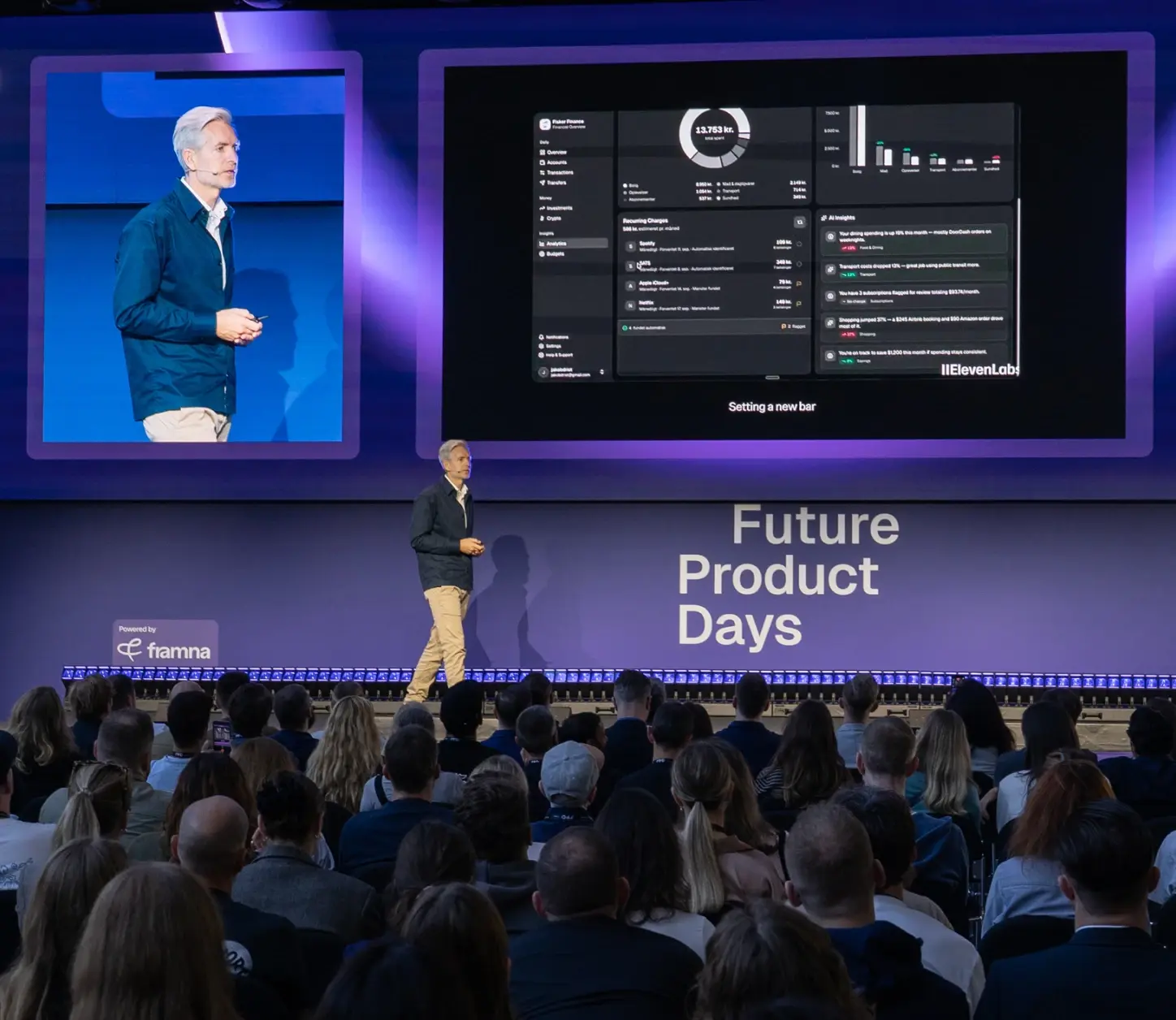
Christoffer Vinther-Høj hosting Framna's product strategy masterclass at Future Product Days 2026.

On the last day of Future Product Days 2026 in Copenhagen, Framna hosted a product strategy masterclass for around 200 product people. Host Christoffer Vinther-Høj and the room worked through one question: how do you set product direction when AI makes building fast? This article collects what came out of the day: the ideas from the stage, the discussions at the tables, and Christoffer's reflections afterwards.

What happens when your team can build its entire roadmap in two months instead of two years?


It's not a thought experiment anymore. And for many teams, the honest answer is: we'd start building the wrong things, faster.


When building stops being the bottleneck, setting the direction becomes the hard part.

Key takeaways

The masterclass in five points. Each one is unpacked below.

01
Set direction, not features. Rewrite the roadmap as a direction and an aspiration, with features as steps toward it.
02
Plan for the roadmap running out. Ask what your team would do if everything on it shipped in two months.
03
Spend the time you save on the problem. Use the time AI saves to understand the problem, and agree on which one you're solving.
04
Lead with a customer story. Make your case from the customer's point of view, and use numbers to back it.
05
Aim for shared understanding. Clarity comes from a shared view of the problem, not from more detailed plans.

Roadmaps should set direction, not dictate features

Picture the classic roadmap. A slide with two years of feature bars, neatly lined up by quarter and signed off in a steering committee. It made sense when building was slow and expensive.


Now technology and customer expectations move faster than that slide can keep up with. And if AI lets your team ship the whole thing in two months, the slide runs out long before the year does.

The roadmap runs out

So the roadmap needs a new job. Instead of listing what to build, it should communicate a direction and an aspiration: where the product is heading, and why that matters to the people using it.


There should always be something for the team to strive towards. Features then become steps toward an outcome, not the outcome itself. And when the plan runs out sooner than expected, the team knows which step to take next, without waiting for the next planning cycle.

Spend the time you save in the problem space

For most product teams, the clock has always been tilted towards solution mode. Designing, building, testing, shipping. Understanding the problem got whatever time was left over, usually squeezed into the first week.


Faster building tilts the clock back. When a solution takes days instead of months, you can afford to stay with the problem until you truly understand it.

Where the time goes
Illustration, not measured data.

But more time only helps if the organization can agree on which problem it is choosing to solve. Many teams still struggle with that. Give them more time in the problem space, and the disagreements surface fast.


So treat problem framing as real work, with its own output: a shared problem statement, the evidence behind it, and an explicit choice about what the team will not solve right now. It's less glamorous than a demo. It's also what keeps the demo pointed in the right direction.

Lead with a customer story

Many product teams are losing the argument over what gets built. The requests arrive from "the business", the roadmap fills up with them, and before long the team is a feature factory, shipping a list it had little say in.


Part of the reason is how product teams make their case. They argue from the product's point of view, in features and capabilities, and forget to connect their ambitions to what the wider business cares about.


The masterclass spent a lot of time on the alternative: leading with a story told from the customer's point of view. Not what the product will do, but what the customer's life will feel like when it does.

Questions to build the story around

Numbers still matter. They show the size of the opportunity and make the case credible. But the story is what sticks, with the people who decide on the direction and with the team that has to deliver it.

Clarity comes from shared understanding

The thread through the day was simple. Product clarity doesn't come from increasingly detailed plans. It comes from a shared understanding of the problem, and of the future you want to create for your customers.


AI can speed up almost everything about building a product. That shared understanding is the one part it can't rush, and the part that decides whether all that speed takes you anywhere.

Run this masterclass with your team

We can run a version of the product strategy masterclass with your own product leaders, built around your product and the decisions in front of you.

More about AI in digital product work

Fresh perspectives from people who design, build and lead digital products

All Insights
All Insights

Subscribe

Join our newsletter and stay up-to-date